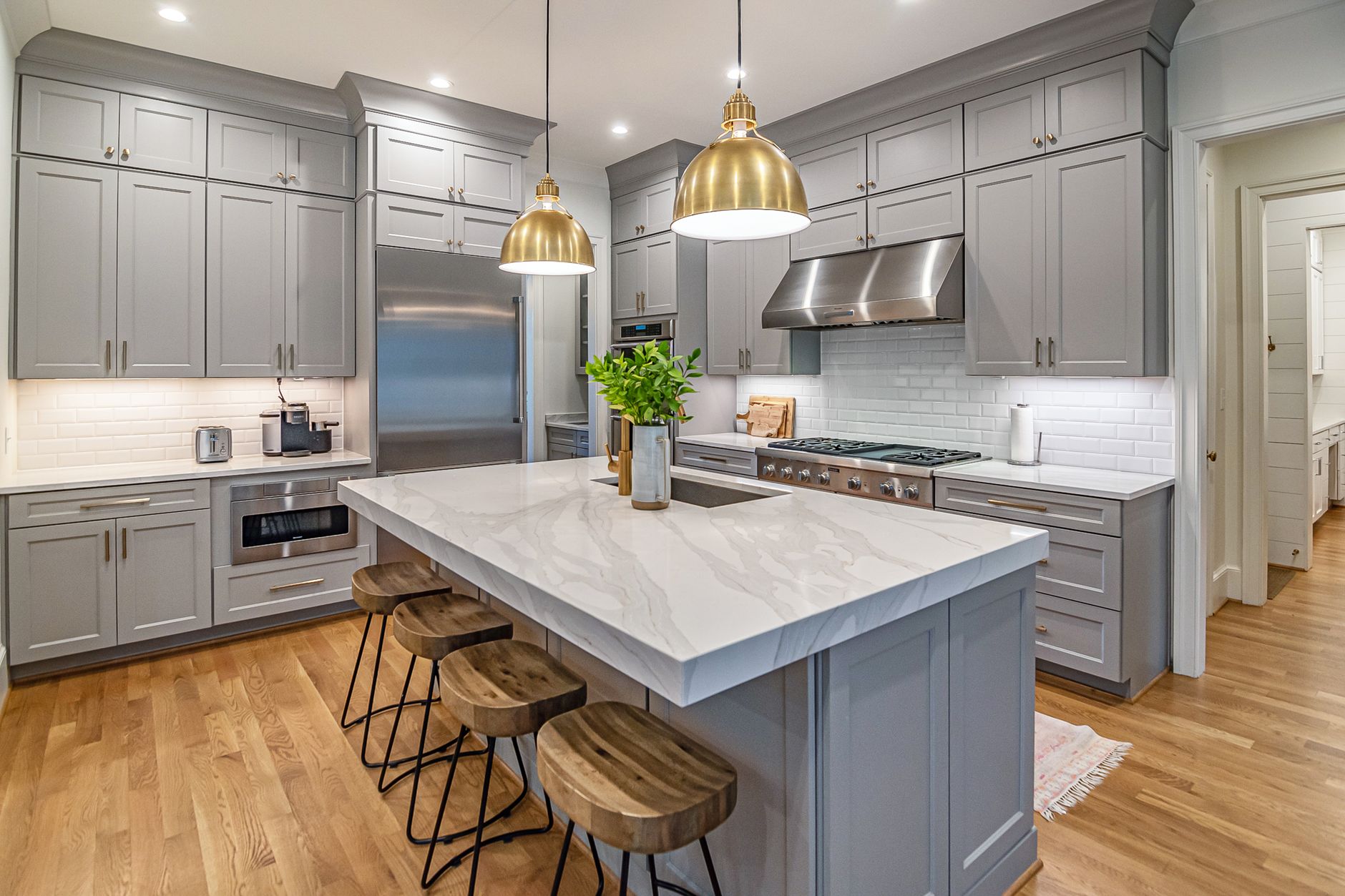
You've lived with your kitchen long enough to know what bothers you. The island that's too small. The cabinet that never quite closes. The corner where nothing fits. Now you want to fix it, and the first question is the fair one: what will this cost?
The honest answer is that two McKinney kitchens of the same size can land far apart on price. The square footage matters less than the decisions you make inside it. Here's what actually moves the number, so you can walk into your first conversation with a contractor already knowing where your money goes.
1. Whether you keep the layout or change it
This is the biggest single factor. If your sink, range, and refrigerator stay where they are, your plumbing, gas, and electrical stay mostly where they are too. That keeps the work simpler.
Moving the sink to an island, taking out a wall, or relocating the range means new lines run through floors and walls. Sometimes it means permits, inspections, and structural support. None of that is a reason to avoid it. It's a reason to decide early, because it shapes everything else.
2. Cabinets
Cabinets usually take the largest share of a kitchen budget. You have three broad paths:
- Stock cabinets come in set sizes and finishes. They cost the least and arrive fastest.
- Semi-custom cabinets give you more sizes, finishes, and interior options.
- Custom cabinets are built for your exact space. They cost the most and take the longest, but they use every inch.
Inside the box, the choices add up quietly. Pull-out pantries, drawer organizers, and soft-close hardware each make daily life easier, and each one adds to the total.
3. Countertops and surfaces
Laminate, quartz, granite, and natural stone sit at very different price points. So does the backsplash. A simple tile runs differently than a full slab carried up the wall. If you love a premium material, consider using it where you'll see and touch it most, like the island, and choosing something simpler elsewhere.
4. Appliances
Appliances can be a modest line item or a major one. A professional-style range or a built-in refrigerator also affects your cabinet design, ventilation, and sometimes your electrical service. Pick appliances before the design is final so the space is built around them.
5. What's behind the walls
Older homes sometimes hide surprises. Outdated wiring, a slow plumbing leak, or uneven subfloor can show up once demolition starts. A good contractor will look for these early and build a small contingency into your budget so a surprise doesn't become a crisis.
6. How many decisions are still open
Changes made after work begins cost more than changes made on paper. Every time a finish, layout, or fixture changes mid-project, it can mean reordering materials and rescheduling trades. The more you settle during design, the closer your final cost stays to your first estimate.
How to set a budget you can trust
Start with what you want the kitchen to do for you. More storage? Room for the whole family at the island? A layout that finally makes sense? Then rank your priorities, so you know where to spend and where to save.
A design-build team can help here, because the people drawing your kitchen are also the people pricing and building it. You see real numbers while the design is still flexible, not after the drawings are done.
If you're starting to plan a kitchen in McKinney or anywhere in Collin County, reach out to Eldorado Interiors. We'll talk through what you want, what it will take, and where your budget will go furthest.